
Author: Simon Daigneault, Product Marketing Engineer, Monolith
Read Time: 11 mins
Most electric vehicles carry a lot of battery that is rarely used.
In practice, daily driving distances are modest. UK travel data shows that around 71% of trips are under five miles, and only a small share are genuinely long distances. Yet we size batteries for worst-case scenarios: weekend trips, holidays, or the one time a month someone does a long motorway run.
That overbuild adds cost and weight. A bigger battery is great for range, but it is not always the best engineering trade-off.
One alternative is a range extender.
What is a range extender?
A range extender is a small onboard power unit, usually a petrol engine and generator, that produces electricity to recharge the battery while you drive. It never drives the wheels directly. The traction motor is always electric; the engine only tops up the battery.
This layout is often called an extended range electric vehicle, or EREV. You still do most of your driving electrically. The engine is there as a safety net when the battery runs low.
Petrol is far more energy-dense than battery cells, so a compact tank and engine can provide a lot of extra range without adding as much mass as another large battery pack.
You get most of the benefits of an EV, with the flexibility of a combustion backup.
So… is this just a hybrid car?
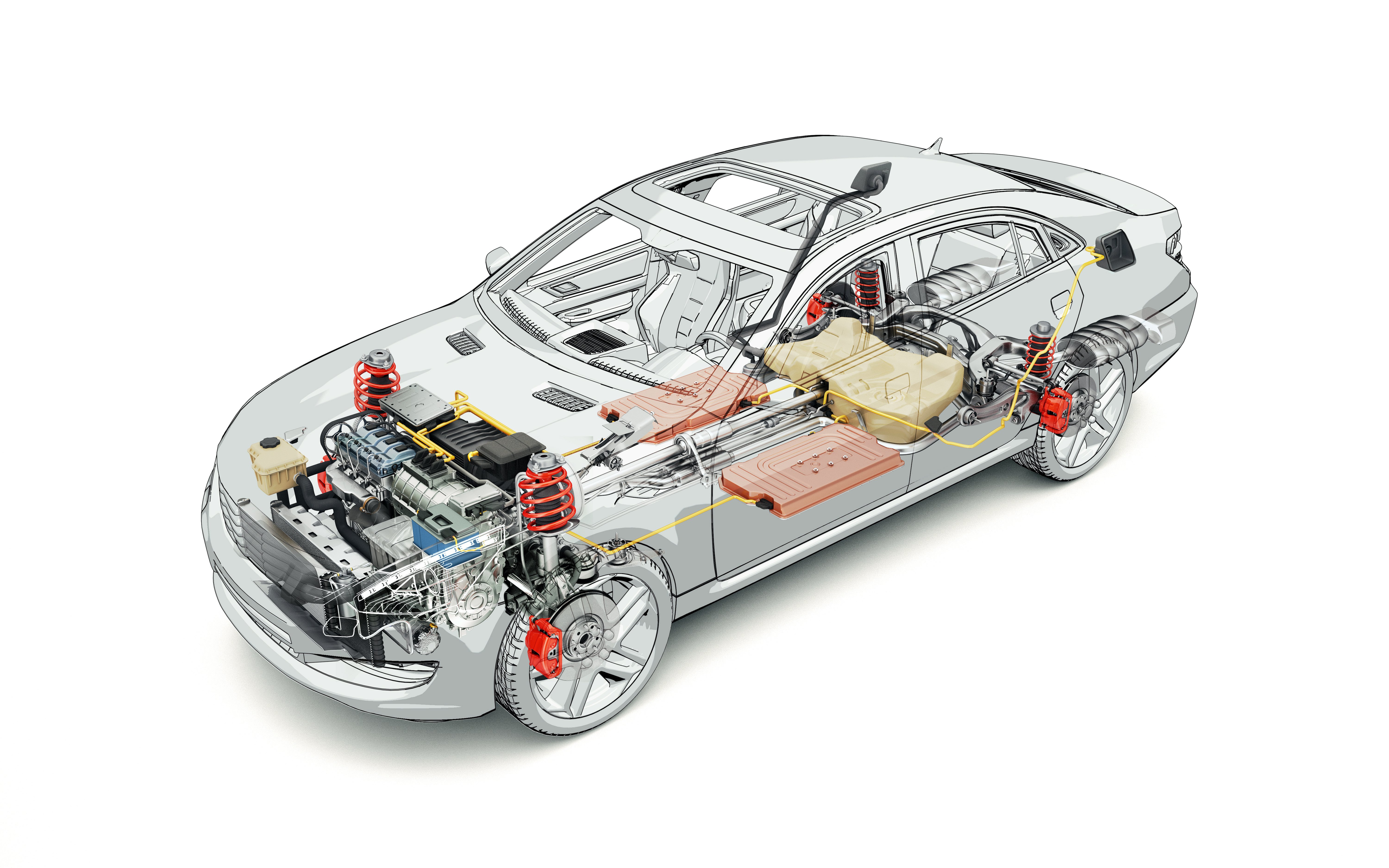
Hybrid Vehicle System Cutaway Illustration
This is the obvious question.
You have a battery and an engine. How is that not just another hybrid or plug-in hybrid?
The difference is in how the powertrain is connected.
- In a conventional hybrid or plug-in hybrid, the engine is mechanically connected to the wheels and can drive the vehicle directly, sometimes assisted by the electric motor.
- In an EREV, the engine never turns the wheels. The wheels are driven only by the electric motor. The engine is there purely to generate electrical energy for the battery.
From a control point of view, that distinction matters. The engine operating points, start-stop logic, and thermal management can all be optimised for generator operation rather than for direct traction.
Why EREVs are interesting again
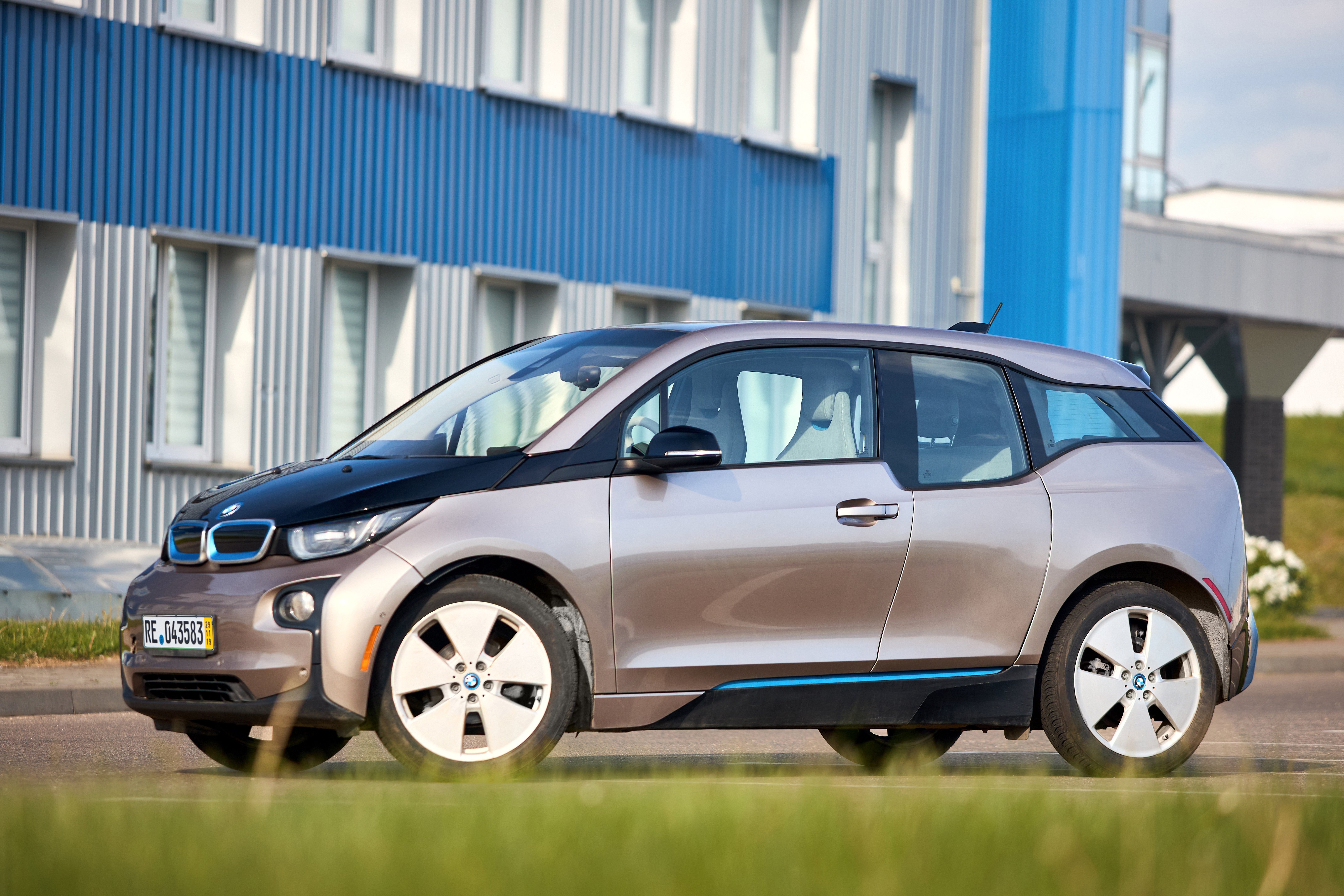
Range extenders are not new. BMW launched the i3 REx in 2014, combining a modest battery pack with a small two-cylinder engine and generator. Several other manufacturers have experimented with similar layouts.
What is changing is the context.
- Battery costs have fallen, but so has tolerance for weight and rare earth use.
- Many real-world daily distances still sit well below 50 km, even in markets with high car dependence.
- At the same time, there is more pressure to decarbonise and to keep exhaust systems simple.
For some use cases, especially long-distance or commercial ones, an EREV layout can hit a sweet spot: mostly electric operation, with a compact, efficient generator that only runs when needed.
That “when needed” is where control and prediction become important.
Predicting Range Extender (REx) Activation with Machine Learning
Traditionally, a range extender controller uses a set of rules based on:
- state of charge
- power demand
- sometimes temperature or other limits
Once the battery drops below a threshold and the vehicle is in a steady state, the controller starts the engine and begins charging the battery.
That works. But it is reactive. By the time you know you need the engine, several things may already be happening:
- the engine needs to spin up and warm up
- the battery may already be close to a lower SoC limit
- you may see transient torque limits or reduced performance
- thermal conditions might be suboptimal
If you can predict a range extender start a few seconds early, you can:
- start spinning or pre-warming the engine before extra power is needed
- blend energy more smoothly between battery and engine
- avoid sudden SoC cliffs that cause torque derate
- reduce the number of short, inefficient start-stop events
Predictive energy management in hybrids and range-extended vehicles has been studied extensively, particularly approaches that use short-horizon forecasts of vehicle velocity or power demand to inform energy management and engine start-stop decisions.
Prior work consistently shows that anticipating near-future driving conditions can reduce unnecessary engine operation and improve overall efficiency.
For example, Lin et al. demonstrate that incorporating velocity prediction into range extender start-stop optimisation can deliver additional fuel savings of approximately 6.7% to 18.2% in simulation, depending on the driving cycle and assumptions used. Many of these strategies also report fewer engine start events and improved drivability.
In this blog, we describe a narrower and more practical step in that same direction: using real test data and machine learning to predict whether the BMW i3 range extender will switch on in the next five seconds.
The dataset: BMW i3 Range Extender from Argonne National Laboratory
To explore this idea, we turned to one of the best public data sources for advanced powertrains: the Downloadable Dynamometer Database (D3) from Argonne National Laboratory.
For this work, we used the 2014 BMW i3 REx dataset.
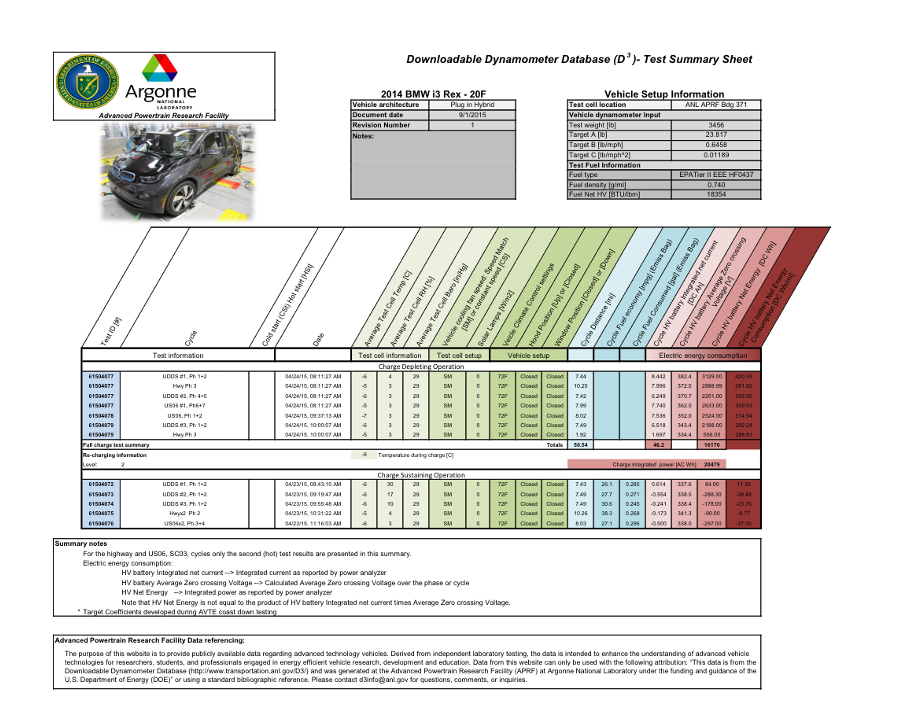
Dataset scale
- 11 individual test files
- Both charge-depleting runs, where the vehicle behaves as a pure EV, and the engine stays off
- And charge sustaining runs, where the range extender is active and maintains battery SoC
- Roughly 3.4 hours of continuous measurement time
- Logged at 10 Hz, which gives on the order of 120,000 time steps
Drive cycles covered
The tests cover the typical EPA cycles:
- UDDS for low-speed urban driving
- HWFET for highway conditions
- US06 for more aggressive driving
Each of these appears in both EV-only and range-sustaining operation, which is useful when you want to compare system behaviour in different modes.
Across all tests, the total accumulated distance is just under 100 miles.
Signals available
- dynamometer speed and tractive effort
- high voltage battery voltage, current, state of charge and net energy
- range extender engine speed and fuel flow
- environmental conditions like test cell temperature, humidity and barometric pressure
- driver demand signals, such as accelerator pedal position
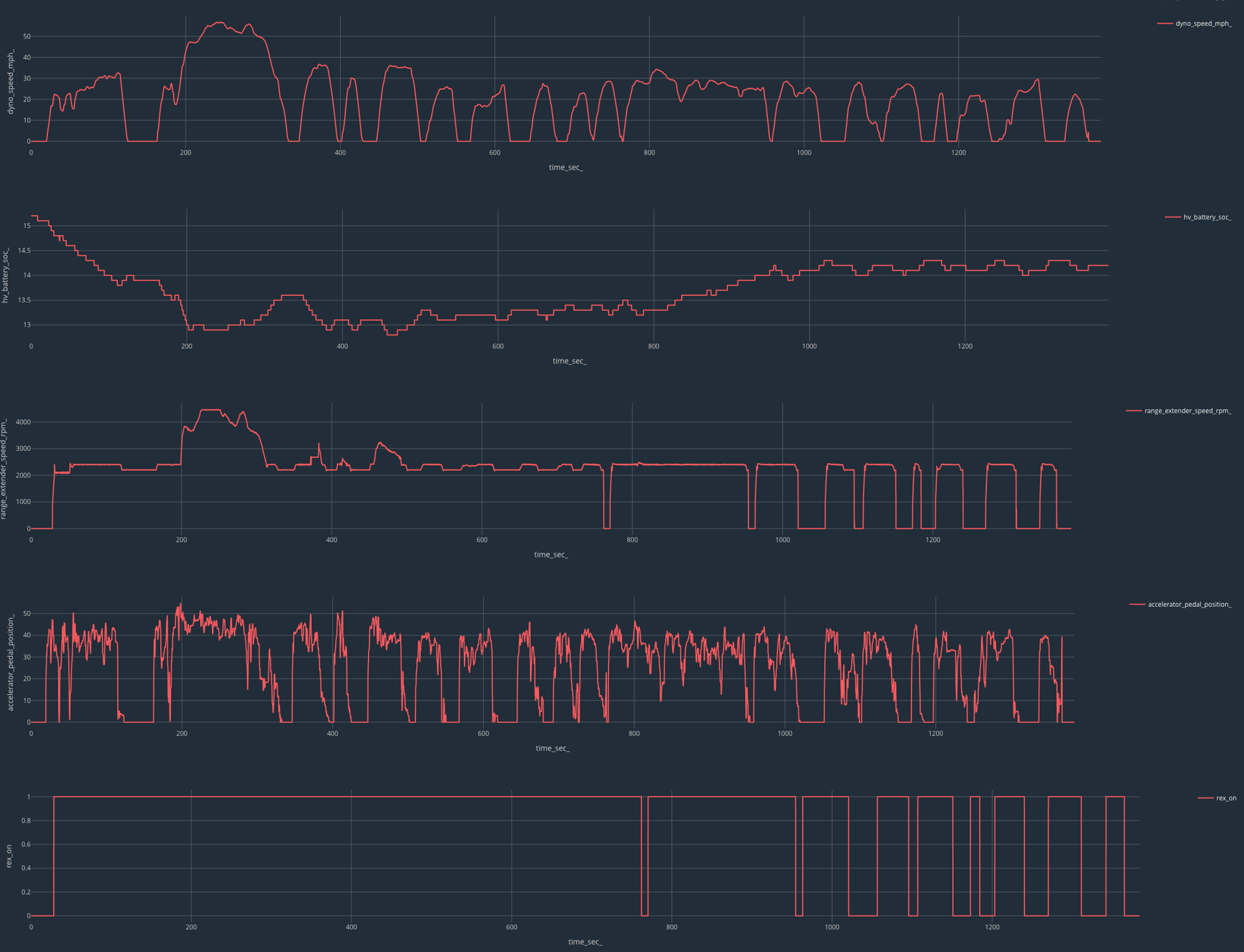
Signals from the BMW i3 Argone dataset visualised in the Monolith platform
This is exactly the kind of dataset calibration engineers would use to understand how a range extender strategy behaves.
Framing the machine learning problem
We are not trying to design a perfect supervisory controller. The aim of this demo is narrower and more practical:
Given what the vehicle is doing now, can we predict whether the range extender will switch on in the next five seconds?
To do that, we convert the continuous-time series into a set of labelled examples.
Creating rolling windows
We slice the data into overlapping 10-second windows.
- The first 5 seconds of each window represent the current state of the vehicle.
- The next 5 seconds represent the immediate future.
For each window, we inspect the range extender speed signal in the prediction half:
- If the REx speed is zero for the entire next 5 seconds, we label the window as no activation (target 0).
- If the REx speed becomes non-zero at any point in that 5-second horizon, we label it as activation (target 1).
This turns hours of time series into a manageable number of training examples, each summarising:
- What the vehicle is doing now
- whether that pattern leads to the range extender starting soon
Inputs to the model
To keep the problem simple and transparent, we deliberately restrict ourselves to a small set of intuitive input signals from the first half of each window:
- battery state of charge
- battery current (as a proxy for power flow)
- tractive effort from the dynamometer
- accelerator pedal position
An engineer would look at exactly these signals when trying to guess whether the range extender is about to come on.
Training the early prediction model in Monolith
Platform demo of range extender activation prediction
We built the model using the Monolith platform. The workflow looks like this:
-
Import the Argonne BMW i3 data and clean out preconditioning segments and negative time stamps.
-
Split the runs into EV only and REx running segments so that it is easy to check behaviour in each regime.
-
Generate the 10-second rolling windows and compute the activation labels described above.
-
Select the four key input signals from the first 5 seconds of each window.
-
Train a Series Model in Monolith, which internally uses a sequence model to map the short time histories to a single output probability for REx activation.
-
Apply the model to held-out windows and evaluate performance.
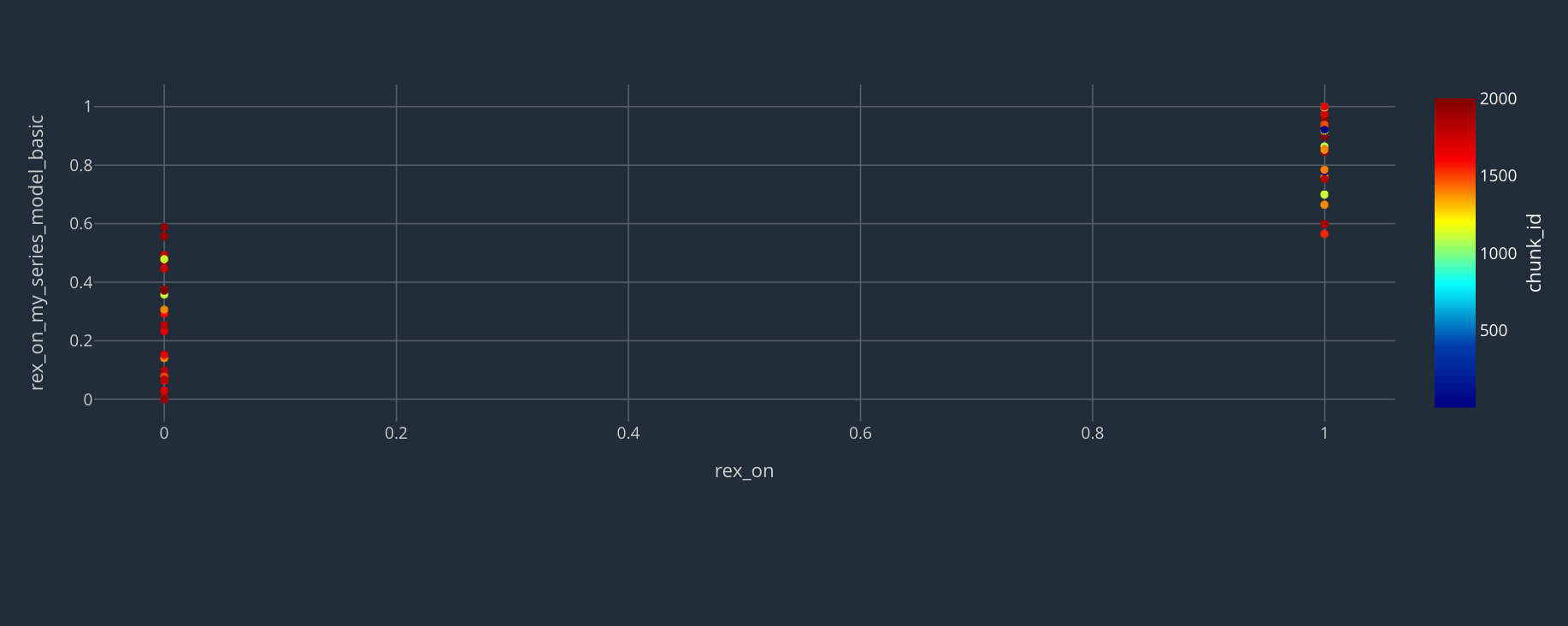
Predictions of range extender switch on vs actuals
- prediction above 0.5 is interpreted as an activation
- prediction at or below 0.5 is interpreted as no activation
In practice, you can tune this threshold to favour either more false positives or more false negatives.
Results
On our validation set the confusion matrix looked like this:
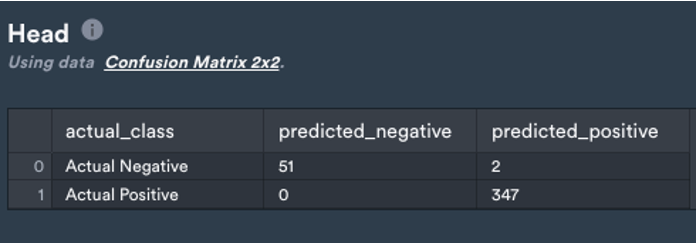
Results of the confusion matrix for this prediction exercise, visualised in the Monolith platform
- 51 windows predicted negative and actually negative (true negatives)
- 347 windows predicted positive and actually positive (true positives)
- 2 windows predicted positive but actually negative (false positives)
- 0 windows predicted negative but actually positive (false negatives)
- Accuracy is 398 out of 400 windows, about 99.5%.
- Precision on the positive class is roughly 99.4%.
- Recall on the positive class is 100%, because there are no missed activations.
Predicted vs actuals
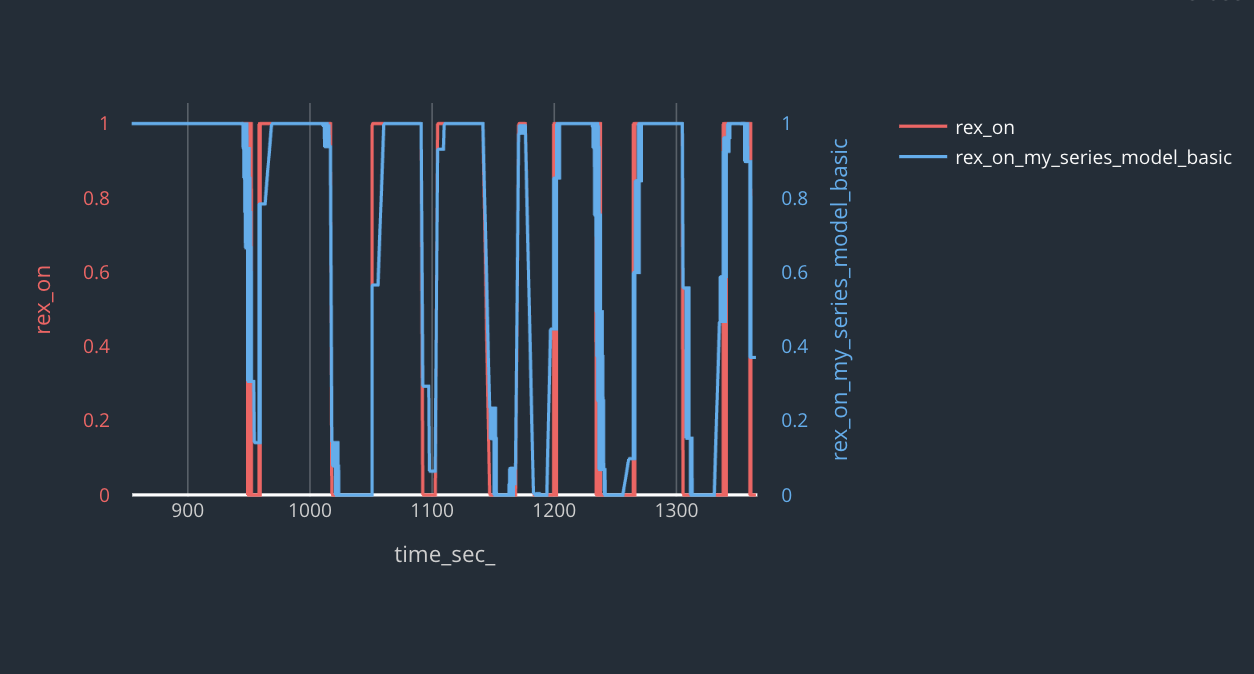
In plain language:
- The model rarely misses a real range extender start in the next five seconds.
- It raises a small number of early warnings that do not turn into actual activations.
For an early warning tool, that trade-off is attractive. A few extra warnings are acceptable; missed activations are more problematic.
Note: Results shown are based on a limited demo dataset and are for illustration only; performance will differ with larger or more diverse data.
Why this matters for developing range extenders
Even in this simplified form, the model creates several practical benefits.
1. Earlier visibility of hybrid transitions
Instead of waiting to see the REx come on in a long test run, an engineer can look at the predicted activation probability and immediately see where transitions are likely.
This is helpful for:
- understanding where in a route the engine tends to start
- spotting strategies that are too aggressive or too conservative
- assessing how changes in thresholds or SoC targets shift behaviour
2. Reduced manual review of time series data
Anyone who has worked with dyno logs knows how long it can take to inspect:
- speed
- power
- SoC
- engine speed
Over many cycles and temperatures.
A learned early prediction model encapsulates that behaviour in a compact form. It does not replace detailed analysis, but it gives engineers a quick first impression and a way to filter tests that need closer inspection.
3. Foundations for predictive energy management
The research community has shown that short-horizon predictive strategies can deliver measurable benefits:
- Several studies on hybrids and fuel cell vehicles report fuel or energy savings between roughly 2 and 4% when using predictive controllers based on route or speed forecasts, compared with rule-based strategies.
- Some range extender specific work reports larger gains, up to around 15 to 20%, for constrained cases where the route has long, predictable gradients or the baseline is a very simple controller.
Having a working early prediction model is a practical first step towards these more advanced strategies.
Machine learning for engineering applications
There are several natural extensions.
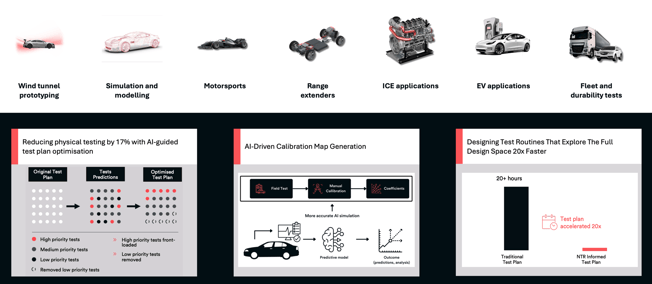
Other example use cases of Monolith applied to automotive engineering
More data and more variety
We have only scratched the surface of the Argonne dataset. It includes:
- different ambient temperatures
- different soak conditions
- other vehicles, including pure BEVs and conventional hybrids
Stronger links to calibration
With a richer dataset, you can start to ask questions like:
- For a given calibration, how often and where does the REx start across a set of real-world drive cycles
- What happens if we change the SoC thresholds or the allowed engine operating points
- Can we reduce start frequency without increasing fuel consumption
Machine learning models of the kind we have shown here can help compare calibrations quickly, before running large expensive test campaigns.
Test plan optimisation
If you can forecast when hybrid transitions occur, you can also use that information to design more efficient test plans.
For example:
- choose cycles that provoke the right mix of EV and REx operation
- focus testing on conditions where transitions are most frequent or most critical
- avoid redundant tests that do not add new information about control behaviour
Conclusion
Range extenders give engineers an additional degree of freedom: a compact generator that can extend range without a huge battery.
To get the most out of that hardware, you need a good understanding of when and why the range extender starts. Predicting activation a few seconds in advance is a simple but powerful lever for smoother energy management and better use of the powertrain.
In this blog we showed how the Monolith platform can take publicly available BMW i3 REx data from Argonne, convert it into rolling windows, and train a small series model that predicts upcoming range extender starts with high accuracy using only a few intuitive signals.
If you are interested in using AI to support calibration, test planning or predictive energy management for hybrid or electric vehicles, our team at Monolith would be happy to talk.

About the author
 An experienced Product Marketing Engineer translating advances in AI into practical insights for battery development. At Monolith, I work across product, engineering, and commercial teams to ensure innovations in our platform deliver real-world value for OEMs. My background includes an MEng in Mechanical Engineering from Imperial College London, with a specialisation in battery testing, and hands-on experience at a battery energy storage startup in pack design, testing, and system integration.